A clogged toilet is a common household event, and most clogs clear with the right tool and a little patience. The first rule is not to flush again. Each flush adds water to a bowl that cannot drain, and the next one may reach the rim.
Before you start, lift the tank lid and check that the flapper can close. If water keeps flowing into the bowl, push the flapper down or turn the shutoff valve behind the toilet clockwise. That stops an overflow while you work.
Step by step: from simplest to strongest
- Put on gloves and lay towels around the base.
- Use a flange plunger, which has a rubber extension that fits into the drain. Press to seat it, then push and pull firmly with the water covering the cup.
- Plunge for about 20 seconds, then break the seal and watch the water drain.
- If the bowl is low, add warm water, not boiling, which can crack porcelain.
- Add a squirt of dish soap, wait several minutes and plunge again.
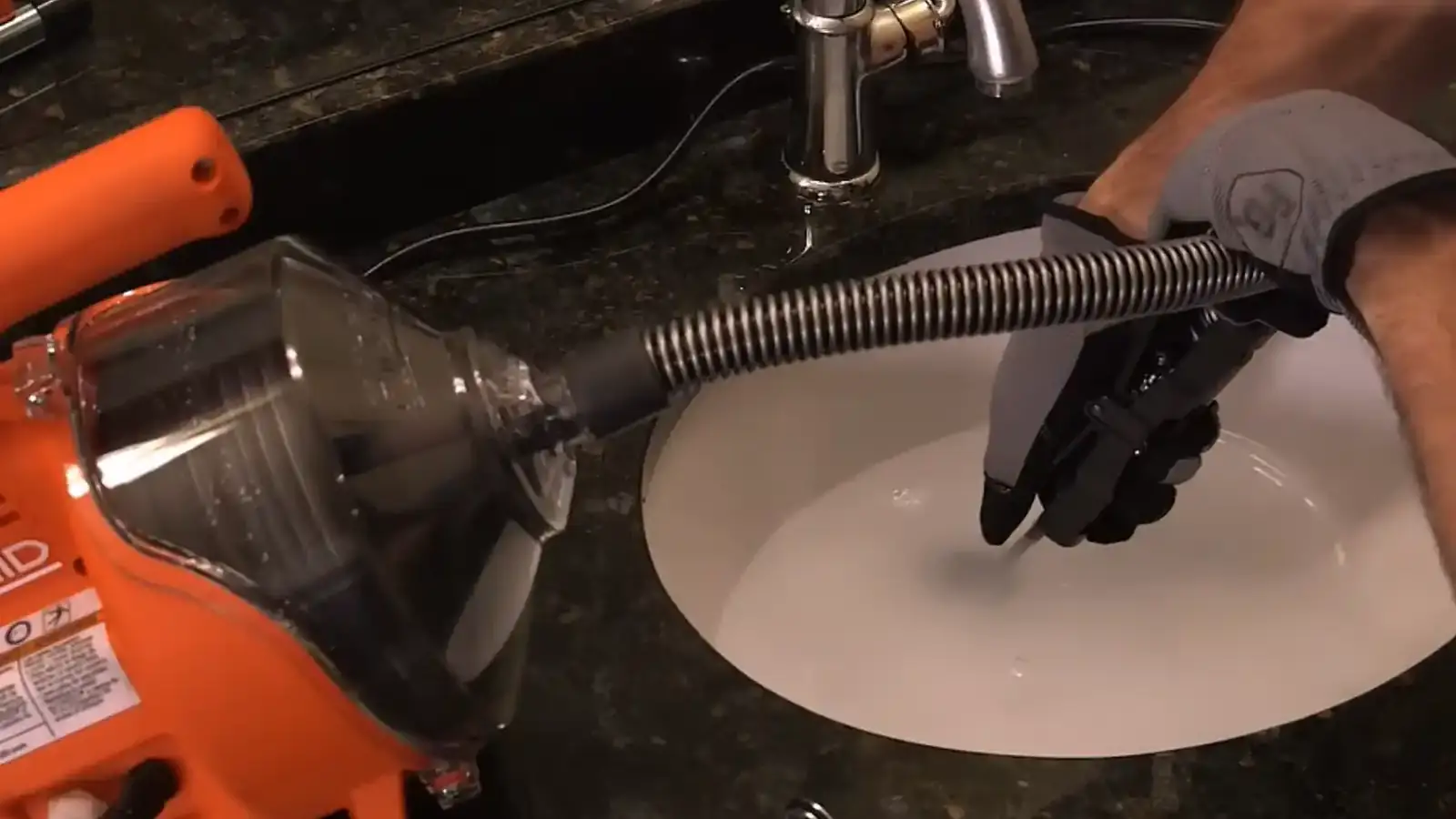
- Use a closet auger, a short toilet snake with a protective sleeve, and turn the handle to break up or retrieve the obstruction.
Most clogs from paper and waste clear in the first three steps. A closet auger deals with a hard object, such as a toy, lodged in the trap. If you cannot clear it, stop before you damage the toilet.
What not to do
- Do not use chemical drain cleaners in a toilet. They sit in the bowl and can burn skin, damage the porcelain finish and make a later plumber's work riskier.
- Do not use a metal snake that can scratch the bowl.
- Do not keep flushing to see if it works.
- Do not pour in boiling water.
Why toilets clog
| Cause | Sign | Prevention |
|---|---|---|
| Too much paper | Bowl drains slowly then stops | Flush in two stages |
| Wipes sold as flushable | Repeated clogs and a dense mass in the trap | Throw all wipes in the trash |
| A foreign object | Sudden blockage, often with a child in the house | Keep toys and products out of the bathroom |
| Low-flow bowl with weak flush | Frequent clogs without an obvious cause | Clean rim jets, consider a better model |
| Main line blockage | Several fixtures slow or gurgling | Call a plumber for the main line |
If the toilet clogs again and again, look at the trap and the rim jets, and think about what is going down. A repeat clog that clears briefly with a plunger often has a cause the plunger does not reach. See toilet repair for what we check.
Westlake and Rocky River notes: when the clog is not just the toilet
Rocky River's sewer department page says its crews maintain and clean all city sewers and are available 24 hours a day on an emergency basis. It also asks residents with water in a basement to call the city's service garage before calling a plumber, at 440-356-5630. If a toilet clog comes with a gurgling floor drain or water in the basement, call the city first, then a plumber for your own line.
Westlake's city website lists a sewer utility bill but does not publish backup guidance on the page we checked. Call City Hall at 440-871-3300 if the whole street seems to be affected. Cleveland Water's tips also remind homeowners that a running toilet is a different problem from a clog, and that a food-coloring test in the tank finds a leaking flapper.
When the clog is deeper than the toilet
If the tub gurgles when you flush, a floor drain bubbles or other fixtures drain slowly, the blockage is in the main line. A plunger will not help and can push wastewater out of the lowest drain. Our sewer line cleaning page describes how we clear a main line.
A toilet that clogs only when others run might have a venting problem. A slow gurgle after a flush is a clue. A plumber can check the vent from the roof or with a camera.
Toilet overflowing or sewage coming up: what to do first
Stop the flow at the tank, turn the shutoff behind the toilet clockwise and do not flush again. Keep children and pets away from the water and open windows for ventilation.
Call (440) 468-0237. Dispatch answers 24/7, and a same-day visit is offered when the schedule allows.
Call (440) 468-0237 nowAfter the clog clears
Flush once to confirm the bowl refills and drains normally. Clean and disinfect the area around the toilet, because overflow water can carry germs. Wash your hands and the plunger handle. Keep the plunger in a bucket or a dedicated place, and keep a closet auger within reach for next time.
We serve Westlake and nearby towns, including the area on our Rocky River page. For slow drains elsewhere in the house, see drain cleaning.
Choosing the right plunger and auger
A flange plunger, with the extra rubber sleeve below the cup, fits the toilet drain and gives a much better seal than a flat sink plunger. If you only own a flat one, buy a flange plunger before the next clog. A closet auger has a short, curved shaft and a rubber sleeve to protect the porcelain.
Keep both in the bathroom or a nearby closet. The worst time to shop for a plunger is when the bowl is full. Rinse and dry them after each use so they are ready.
Teaching the household what not to flush
Paper made for toilets breaks down in water. Wipes, cotton swabs, dental floss, feminine products and paper towels do not. A short note on the wall or a bin with a lid next to the toilet reduces clogs more than any tool. Children flush toys, so a closed lid and a conversation helps.
Toilet clog will not clear? Call and tell us what you have tried.
Call (440) 468-0237Sources
Sewer and basement guidance is from the City of Rocky River's page and the City of Westlake website. The toilet leak test is from Cleveland Water's tips.
Questions homeowners ask
Warm water with a squirt of dish soap can lubricate a clog and help it move, especially paper. Do not use boiling water.
Paper volume, wipes, a weak flush or a partial blockage deeper in the line are the usual causes. A plumber can check the trap and the line.
It is not recommended. Chemicals can damage the toilet and are a hazard for the next person who works on it.
Rocky River's sewer page asks residents to call the service garage at 440-356-5630 before a plumber, then call us for the private line if the city finds the public sewer clear.