What the utility reports
Cleveland Water draws its drinking water from Lake Erie. Its 2025 water quality report lists hardness, measured as calcium carbonate, between 105 and 130 with an average of 117, and a pH between 7.03 and 7.57. The report does not tell you what comes out of your tap, because your home's plumbing adds its own influence.
That is why we recommend a test at your own tap before buying anything. A simple hardness test kit is inexpensive, and some people ask a water treatment company for a lab test.
Do you need a softener?
White scale on faucets and showerheads, spots on dishes, stiff laundry and a heater that makes popping noises.
Few visible signs and a household that is happy with the water. Many homes with moderately hard water do fine without one.
Taste, odor or chlorine complaints are filtration questions, not hardness questions.
Softener versus filter
| Equipment | What it does | What it does not do |
|---|---|---|
| Salt-based softener | Removes calcium and magnesium that cause scale | Does not filter chlorine, taste or particles |
| Carbon filter | Reduces chlorine taste and odor | Does not soften |
| Sediment filter | Catches particles and rust flakes | Does not soften or remove taste |
| Reverse osmosis at one tap | Reduces many dissolved solids for drinking water | Does not treat the whole house |
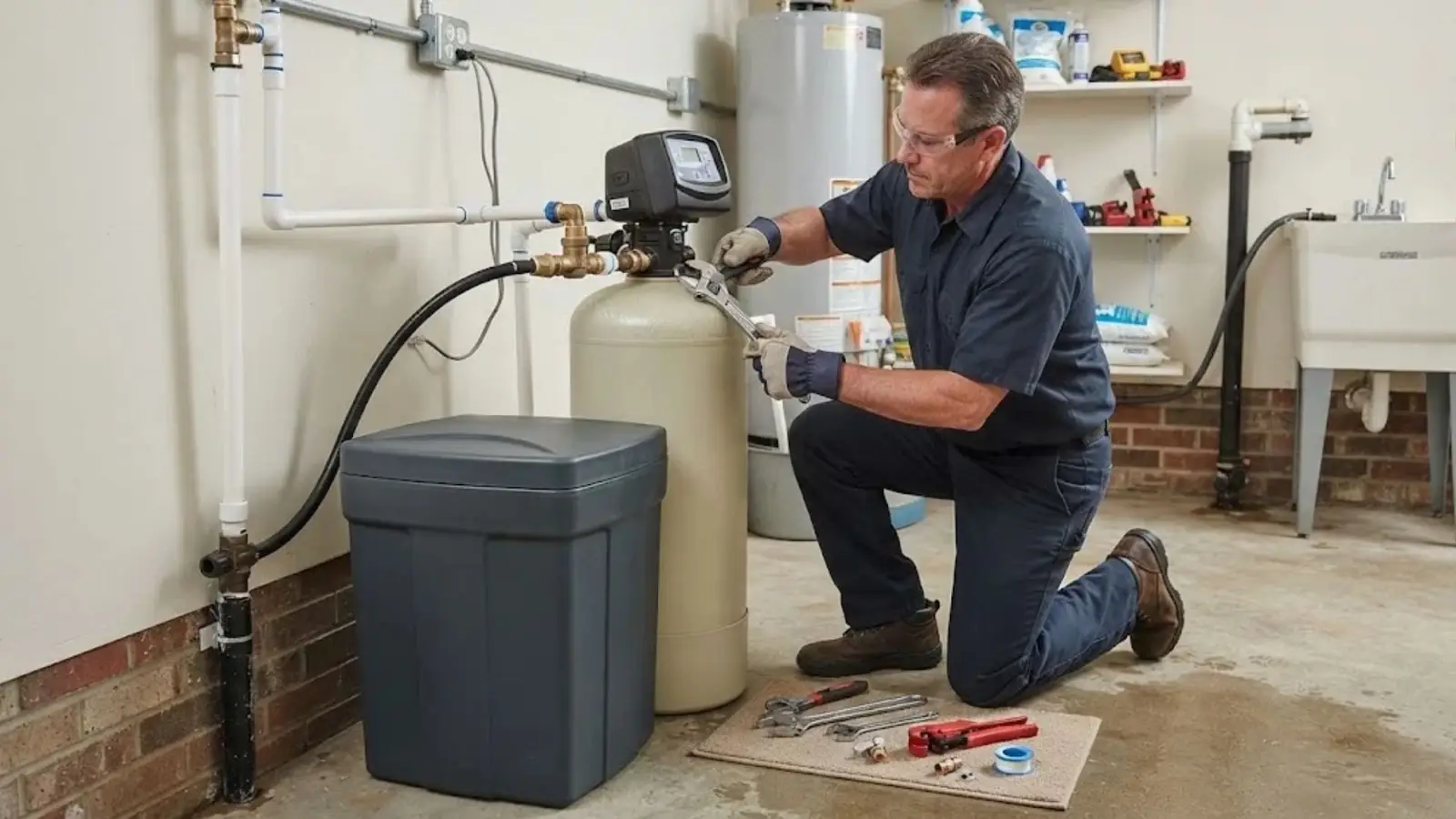
We install softeners and filters on the main water line, with a bypass and a drain connection for the regeneration cycle. We also check the water pressure and the plumbing before the install.
Costs and upkeep
A softener uses salt and some water for regeneration. You refill the salt every few weeks and the unit needs occasional cleaning. The running costs are modest next to the cost of scale damage to a heater, but it is a recurring chore.
Our water heater repair and tankless heater pages describe what scale does to those appliances, and why it affects your decision.
Lead and filtration
Cleveland Water says some homes in its service area have lead service lines or plumbing that contains lead, and it offers an inventory you can search by address. If you are concerned about lead, check the inventory and talk to the utility. A water filter should be certified for lead if that is your goal, and a softener is not designed to remove it.
A testing plan before you spend money
- Test water hardness at a kitchen tap with a kit, and write down the result.
- Look at your water heater and fixtures for scale buildup.
- Ask Cleveland Water for its latest report and compare it with your own result.
- Call us if you want the install priced against your actual numbers.
Treatment should match what the test shows. A softener makes sense where hardness is clearly causing trouble. If the main complaint is chlorine taste, a carbon filter is the right tool and a softener is not.
Where the softener goes
A softener is installed on the main line after the meter and shutoff, and before the water heater, with a drain nearby and a power outlet. Outdoor hose bibs usually stay on untreated water. We plan the layout in the basement and show you where the bypass valve sits so you can shut the unit off if you ever need to.
Wondering whether you need a softener? Call and we will talk through a test.
Call (440) 468-0237Sources
Hardness, pH and lead-line statements are from Cleveland Water's published report and inventory page. Confirm figures at your tap.
Frequently asked questions
Cleveland Water's 2025 report lists hardness as calcium carbonate averaging 117, which is moderately hard. Your own tap may differ, so test it.
A softener treats hardness only. Taste, chlorine and contaminants need filtration or other equipment.
Not usually. Low pressure is more often a regulator, valve or pipe issue. We can check it.
Size depends on household water use and hardness. We size it from your test result and the number of people in the home.