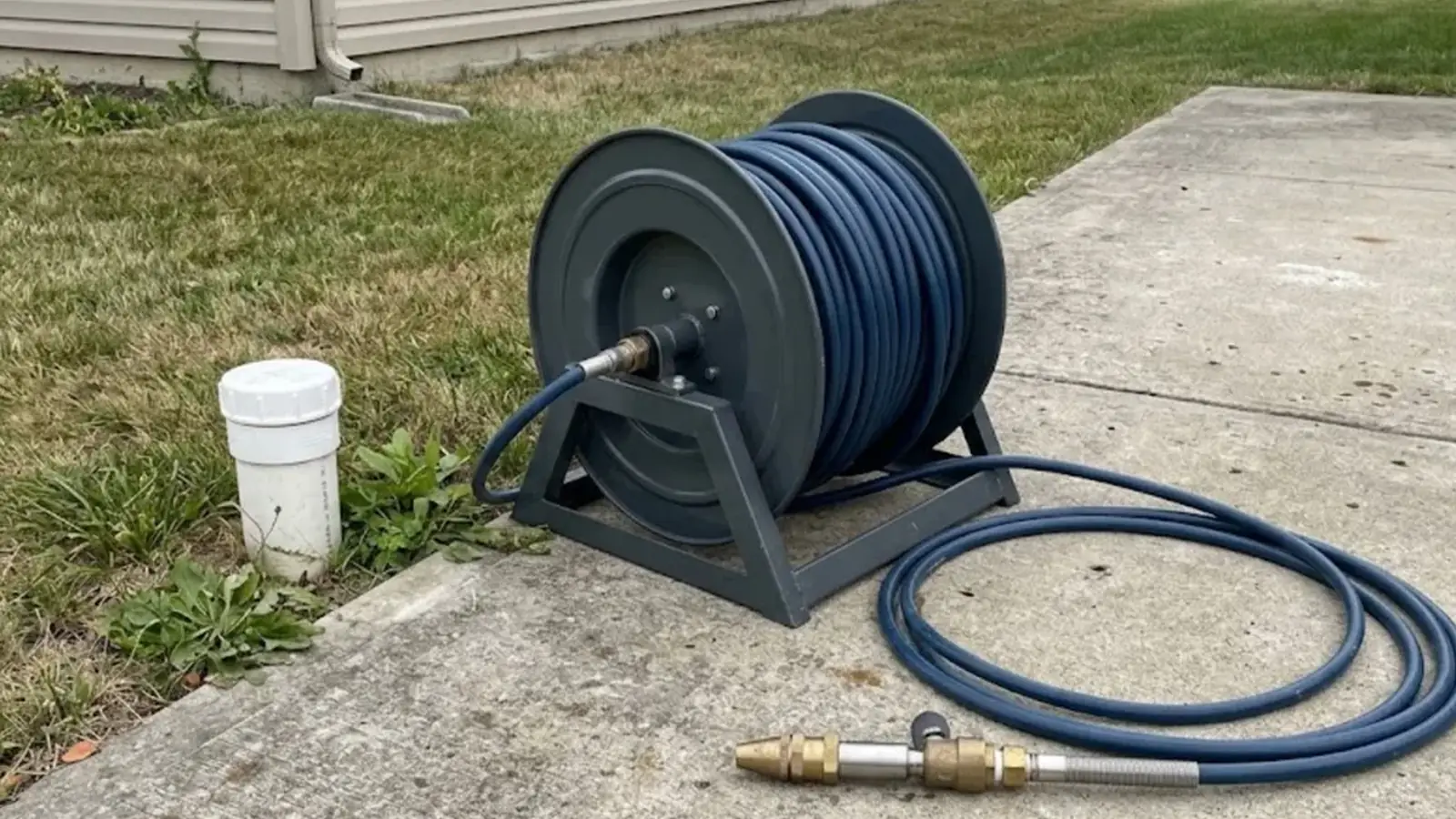
Hydro jetting uses a high-pressure stream of water, delivered through a flexible hose with a nozzle, to scour the inside of a pipe. A cable machine punches a hole through a clog. A jetting nozzle cleans the whole circumference of the pipe, so the line returns to something close to its full diameter.
That difference matters for lines that clog again every few months. We use it on grease-laden kitchen drains, scale-coated cast iron and lines where fine roots have grown into joints.
Cable or jet: how we decide
| Situation | Better first choice | Reason |
|---|---|---|
| Single sink, first-time clog | Cable machine | Fast and enough for a simple blockage |
| Kitchen line that clogs every few months | Hydro jetting | Removes the grease film cable work leaves behind |
| Roots entering at a joint | Cable cut, then jetting | Cutting opens the line, jetting cleans the pipe wall |
| Cracked or collapsed pipe | Camera, then repair | Jetting cannot fix a broken pipe |
We confirm the pipe is sound before jetting. High-pressure water in a cracked or collapsed line can make a failure worse, which is why a camera look comes first on older or unknown lines. See sewer inspection for how that works.
Where jetting earns its keep
Kitchen waste lines carry fats that cool and cling to the pipe. Busy restaurant kitchens often need jetting on a schedule.
Scale builds inside cast iron over decades. Jetting removes loose scale and restores flow in the basement main.
After roots are cut out, jetting washes the fine fibers that regrow quickly from the pipe wall.
Our commercial plumbing page covers the maintenance side for businesses, including how often to schedule it around your service hours.
Emergency backup: what to do while the jetter is on the way
Turn off dishwashers, washers and anything else that sends water down the drain. Close floor drain covers and keep people away from standing wastewater.
Call (440) 468-0237 to describe the backup. Dispatch is available 24/7, and same-day service is offered when schedules allow.
Call (440) 468-0237 nowWhat to expect on the visit
The plumber finds a cleanout, runs a camera or clears the line enough to place the jetting hose, and then works the nozzle forward and back through the pipe. Water and debris are flushed toward the main, and we watch the flow until it runs clean.
Expect some noise and a wet work area around the cleanout. We lay down protection and cover floor drains nearby. Afterward we tell you what came out and whether a repair or a maintenance schedule makes sense.
What jetting does not do
Jetting cleans pipe. It does not repair it. If the camera shows a crack, a collapsed section or a joint that has dropped, the next step is repair, and we will not sell cleaning as a fix for a broken pipe. Offsets and bellies hold water and debris no matter how clean the pipe wall is, so those lines still need sewer line repair.
There is a modest cost in disruption. Expect a wet area around the cleanout and some noise for a short time. Occupants rarely need to leave the building, and a business can book work outside service hours so the kitchen or restrooms stay open.
Aftercare that keeps a jetted line clean
Wipe grease from pans into the trash before washing them. Keep wipes, even ones sold as flushable, out of toilets. Run hot water for a short time after washing greasy dishes. Those habits stretch the time between cleanings far more than any product from the store.
Line keeps clogging? Call and ask whether jetting makes sense for your pipe.
Call (440) 468-0237Frequently asked questions
It is safe for sound pipe. For old or damaged lines we look with a camera first, because jetting a cracked pipe can make the damage worse.
Yes. Dispatch answers 24/7. A backup that keeps returning after cable work is the kind of call we send out as soon as a plumber and jetter are free.
It depends on volume and menu. A grease-heavy kitchen may need it several times a year, while a light-use office line may need it rarely. We set a schedule after the first visit.
It cleans roots and root fibers from the pipe wall. A cable cutter usually opens a root-packed line first. Roots can regrow if the pipe has an open joint, so repairs may follow.