
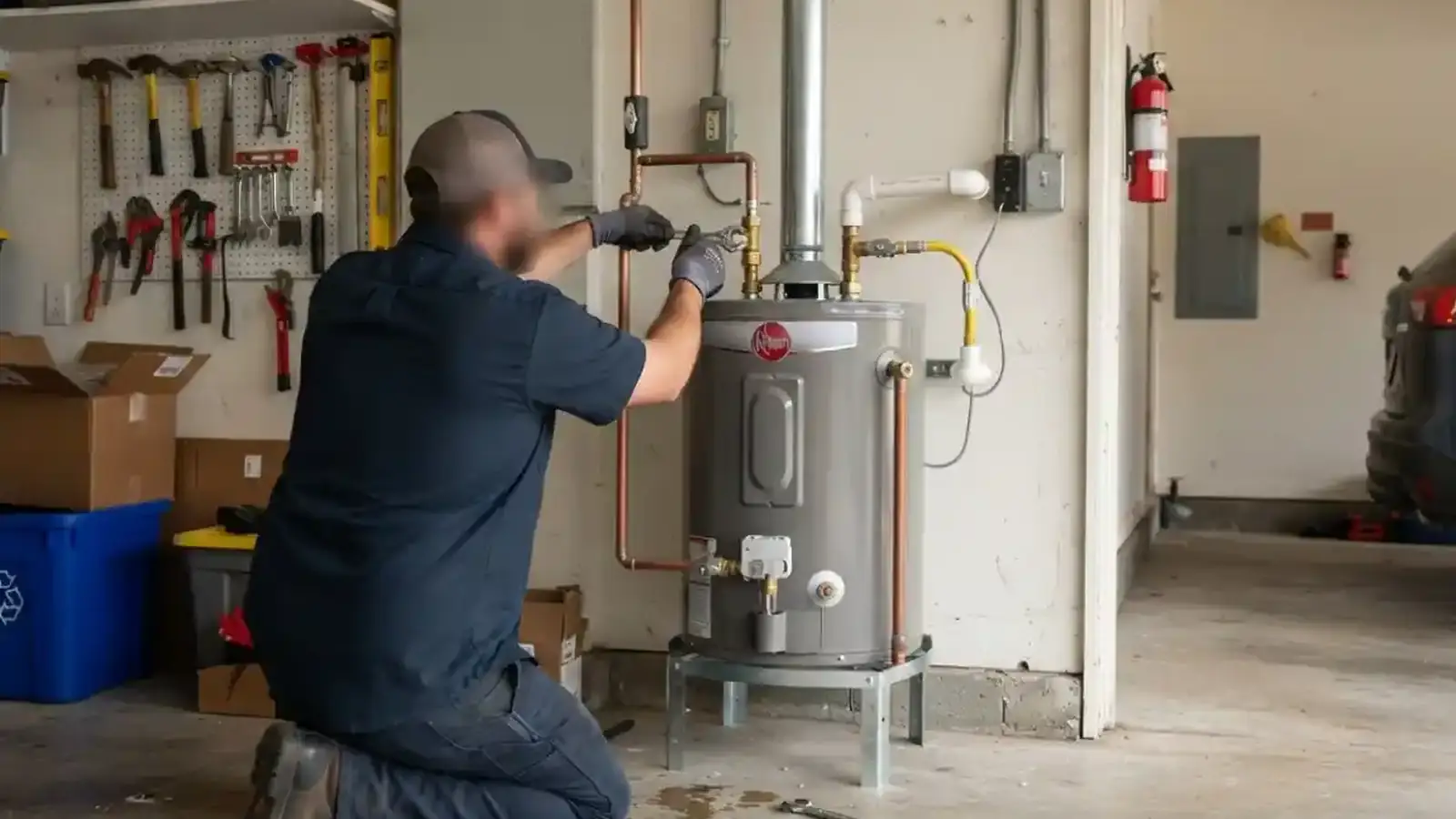
When replacement beats repair
Some water heaters cannot be saved. A tank that leaks from the shell has corroded through, and no part fixes that. Heavy rust at the base, repeated element or valve failures and a unit that no longer keeps up with the household all point toward replacement.
We replace tank heaters like for like in most cases, and we also help with upgrades to larger tanks, hybrid models and tankless units when the home supports them.
Tank failed or flooding: what to do first
Cut off the cold water to the heater, kill the power at the breaker for electric units or set the gas control to off, and open a hot faucet to relieve pressure. Move stored items off the floor and watch for water headed to a floor drain.
Call (440) 468-0237. We answer 24/7, and same-day replacement is offered when the schedule allows.
Call (440) 468-0237 nowWhat a replacement visit includes
From drain-down to hot water
- Assess the setup. Venting, gas line, electrical supply, shutoff valves and the space around the unit.
- Drain and remove the old tank. We haul it away from the work area.
- Install the new unit. New connectors, shutoff valve, relief valve and discharge pipe where needed.
- Test and explain. We check for leaks, set the temperature and show you the controls.
Choosing the right size and fuel
Fuel type usually stays the same unless you are changing the home's setup. Capacity depends on how many people use hot water and at what times. A household that runs a shower, a dishwasher and a washer in the same hour needs more recovery than a couple that spreads its use out.
We ask about your household and the existing unit before recommending a size. For a planned upgrade rather than an emergency, see water heater installation.
Venting and combustion air matter as much as capacity. A new gas tank must be vented correctly, and the room must have enough air for the burner. Those checks are part of every gas swap.
Extending the life of the new heater
Cleveland Water's 2025 report lists moderately hard water, with hardness averaging 117 as calcium carbonate. That means scale will collect in the new tank over time. A yearly flush and an occasional anode check are the cheapest way to get a full life out of the heater. If scale is a recurring problem at your fixtures, a water softener is worth testing for.
Access, the old tank and what to clear beforehand
Basement stairs, tight utility rooms and low ceilings affect how a tank is moved out and a new one set. Clear a path from the stairs to the heater and move storage away from the unit. If anyone in the house uses a medical device that needs steady power, tell dispatch so we plan around it.
Many systems also need an expansion tank or new shutoff valves when a tank is replaced. We tell you what the install needs before work starts and show you the parts that go in.
A replacement should follow the manufacturer's instructions and the Ohio Plumbing Code, which the Ohio Board of Building Standards adopted on the basis of the International Plumbing Code (IPC). Ask your plumber to confirm the relief valve and its discharge pipe meet it.
Tank leaking or past repair? Call and we will talk through replacement options.
Call (440) 468-0237Sources
Hardness figures are quoted from Cleveland Water's published 2025 report.
Frequently asked questions
A standard like-for-like swap is usually done in a few hours once the unit is on site. Venting changes, code updates or access problems can add time.
Yes. Dispatch answers 24/7. A failed tank in the middle of the night is treated as urgent, and we help you stop the water until a plumber arrives.
Sometimes. It depends on the electrical capacity available at the panel and the vent setup. We can explain what would be required before you decide.
Yes. Removal and disposal of the old tank is part of the visit.
Permit rules vary, so ask the Westlake Building Department. We can describe the work so you know what to ask.