Signs your supply lines are near the end
- Brown or orange water when a tap has not been used for a while.
- Low pressure at several fixtures that does not improve with new aerators.
- A pattern of pinhole leaks in different spots, not one repair that failed.
- Visible corrosion or flaking at joints in the basement.
Why galvanized and old copper cause trouble
Galvanized steel pipe corrodes from the inside. Rust builds up in the walls of the pipe and narrows it, which is why pressure drops. The rust can also flake and discolor water. Copper lasts much longer but can develop pinhole leaks from the inside, especially in water with certain chemistry.
Once a house has several failures, repeated spot repairs cost more in time and damage than a planned replacement. That is the point where repiping stops being a luxury.
Materials and methods
| Material | Strengths | Notes |
|---|---|---|
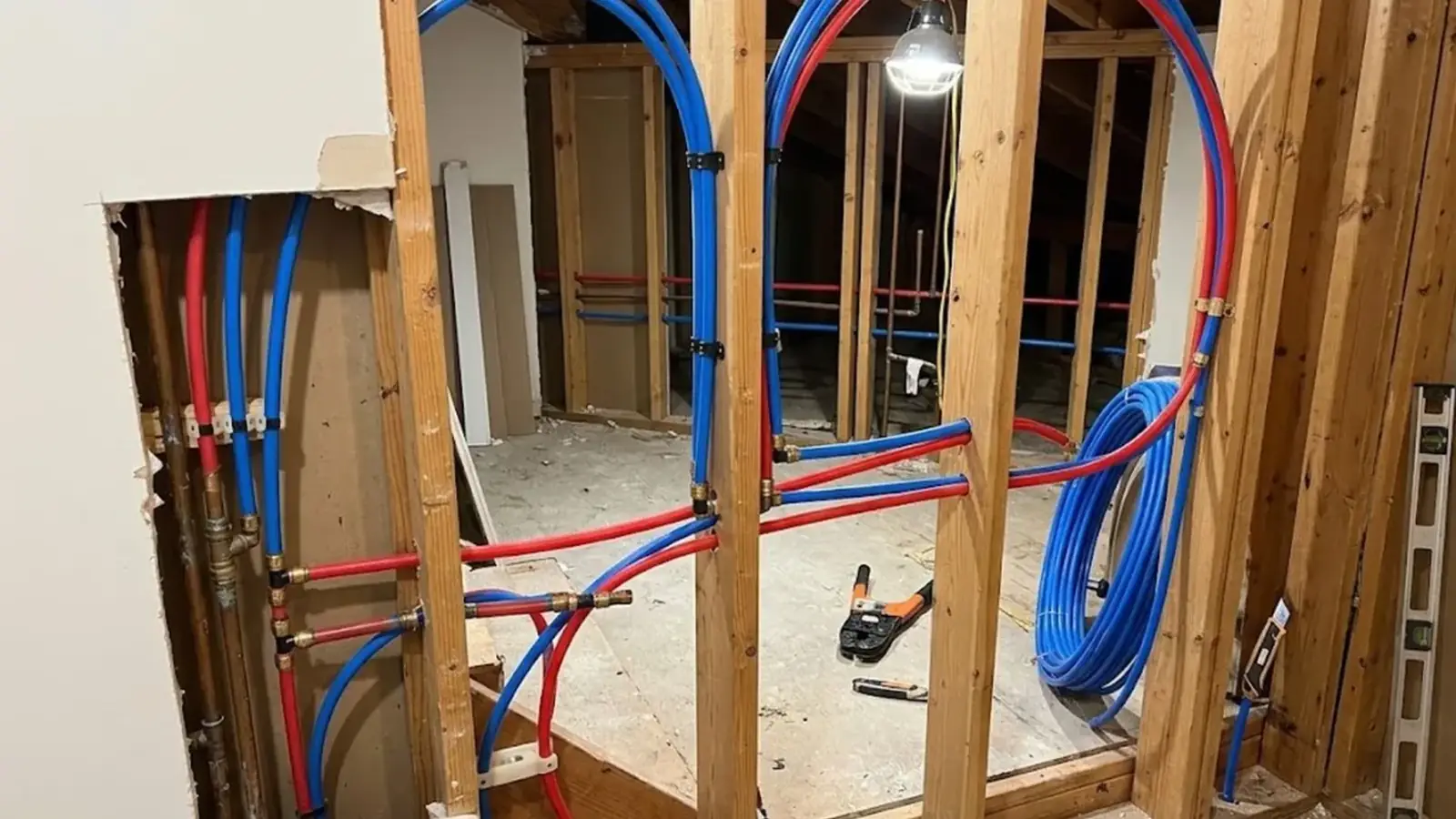
| PEX tubing | Flexible, quick to run, resists freeze splitting better than rigid pipe | Not used outdoors in sunlight, and needs correct fittings |
| Copper | Long track record, solid in exposed runs | Higher material cost, needs soldering |
| CPVC | Lower cost for hot and cold lines | Can become brittle with age and heat |
Which material fits depends on the house, the access and the local rules. Permit requirements vary, so ask the Westlake Building Department what applies. We explain the choices and why we lean one way.
Lead and the service line
Cleveland Water says some homes and buildings in its service area have lead service lines or plumbing that contains lead, and it maintains a service line inventory you can search by address. Its 2024 sampling found 1 of 52 samples above the 15 parts per billion action level, with a 90th-percentile result of 3.15 parts per billion.
Interior repiping replaces the pipes inside the house. The service line from the street to the meter is a separate matter, and Cleveland Water's inventory shows what material it has on record for your address. If it lists lead, ask the utility about next steps.
How a repipe is done
We map the existing runs, plan the new routing and open only the walls and ceilings we need. A house is usually without water for part of a day, and we plan stages so one bathroom and the kitchen can work as quickly as possible.
Drywall repair is a separate trade, so we tell you what to expect at each access point. For a single section rather than the whole house, ask about a partial repipe, and see leak detection if you are unsure where the leaks are.
Planning a bathroom remodel? A repipe goes well with new fixtures. See plumbing installation for how we coordinate the two.
What to ask any plumber before a repipe
Ask which material they recommend and why, how much of the wall and ceiling will be opened, how the water shutoff will be staged and what inspection the work needs. A plumber who answers these plainly is worth trusting with the job. You can also ask the Westlake Building Department what permit applies, and which licensing or registration your plumber works under.
Replacement piping in Ohio is installed under the Ohio Plumbing Code, which draws on the International Plumbing Code (IPC), so the materials and fittings used should be approved for potable water under that code.
What to do if a pipe fails before the repipe
- Shut off the main water valve at once.
- Open a low faucet to drain the pipes and ease pressure.
- Turn off the water heater power or gas if the tank may drain.
- Move belongings out of the wet area.
- Call for a plumber and describe where the water is coming from.
Wondering if your pipes are due? Call and describe the symptoms.
Call (440) 468-0237Sources
Lead and sampling figures are quoted from Cleveland Water's 2025 report and its service line inventory page.
Frequently asked questions
A typical house takes a few days of work, though the water is off for only part of each day. The schedule depends on the house size and access.
Usually not. We stage the work so the house keeps some water, and we tell you in advance which days will be hardest.
No. Low pressure can come from a failing regulator, a partly closed valve or clogged aerators. We check these first and recommend repiping when the pipe itself is the cause.
Yes. A partial repipe addresses the worst section, such as a failing galvanized run, and leaves sound pipes alone.