Toilet problems we fix
| Problem | Usual cause | Fix |
|---|---|---|
| Overflowing or will not flush | Clog in the trap or branch line | Plunge or auger, check the line |
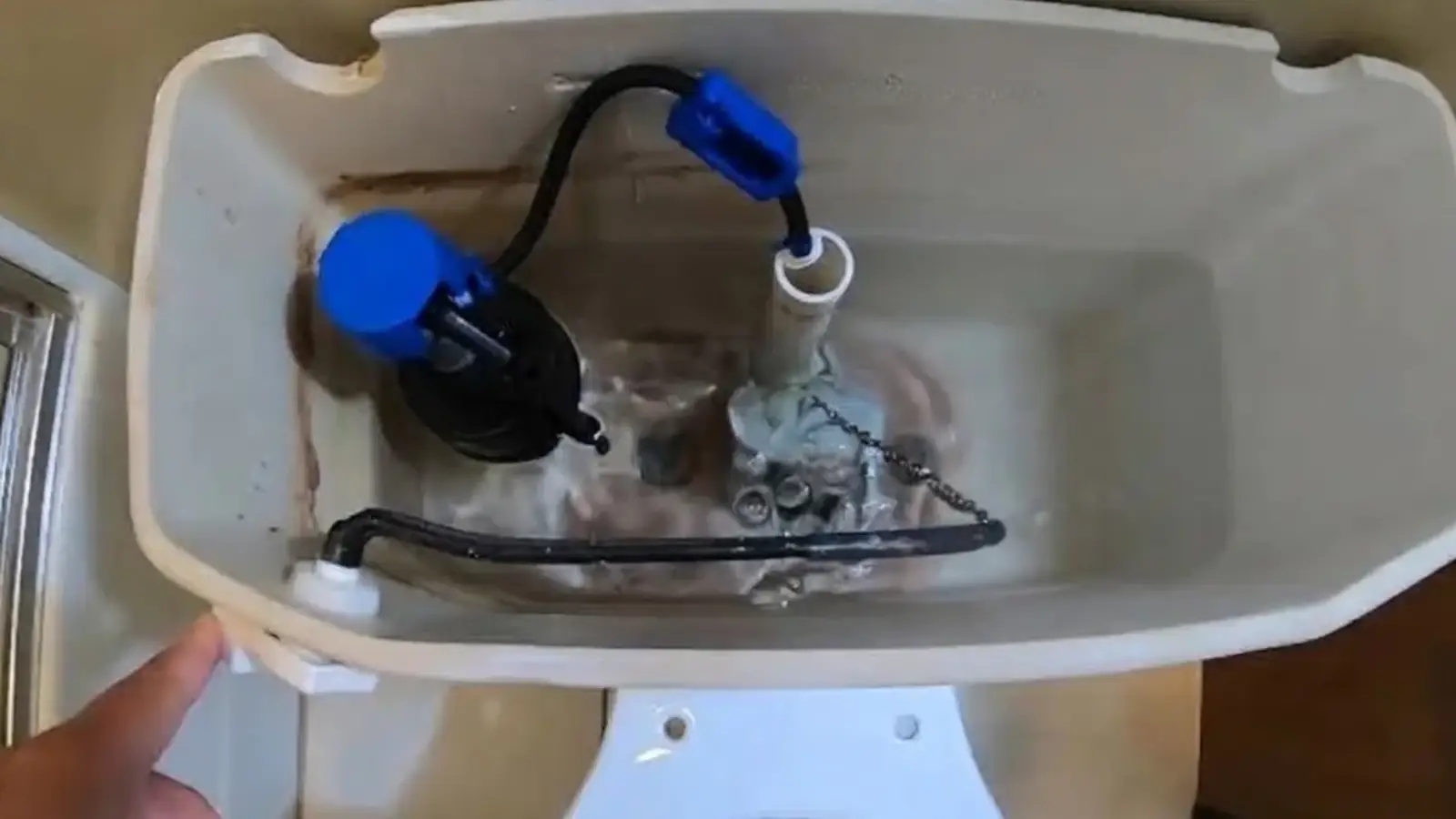
| Running water in the tank | Worn flapper or fill valve | Replace the part |
| Water at the base | Failed wax ring or loose bolts | Reset the toilet with a new seal |
| Rocking bowl | Loose floor bolts or damaged flange | Tighten, shim or repair the flange |
| Weak flush | Partially blocked jets or low tank level | Clean the rim jets, adjust the fill |
A running toilet adds up
Cleveland Water says a running toilet can waste 200 gallons or more a day, and the most common cause is a worn rubber flapper. Its simple test is to put a few drops of food coloring in the tank, wait 15 to 30 minutes without flushing and see whether color reaches the bowl.
A flapper or fill valve is a small repair, and it can pay for itself on the next water bill. If color shows up in the bowl, call us or replace the flapper yourself.
Toilet overflowing: emergency steps
Stop the flow at the tank by pushing the flapper down, then turn the valve behind the toilet clockwise. Do not flush again. Use towels to keep water off the floor and turn off power in the room if water has reached outlets.
If other fixtures are also slow or backing up, the problem is likely in the main line. Call (440) 468-0237. Dispatch answers 24/7, and same-day service is offered when schedules allow.
Call (440) 468-0237 nowRepair or replace
An old toilet with a cracked bowl, a rusted bolt set or a design that no longer flushes well is often not worth repeated repair. A new toilet is a modest job and often more efficient than the old one.
We install toilets of every common type, set them level on the flange and test for leaks. If the flange is damaged, we repair it first. See plumbing installation if you are adding a new toilet in a bathroom project.
When it is not just the toilet
A toilet that backs up along with a tub or floor drain points to a larger blockage. In that case, our drain cleaning page explains the next step. A toilet that clogs on its own is usually local, and a plunger or closet auger is the first tool to try.
Choosing a replacement toilet
Rough-in distance, the measurement from the wall to the center of the drain, decides which toilet fits. Most are 12 inches, but older homes can differ. Bowl shape, seat height and flush design affect comfort and clogging. We can check the rough-in and help you pick a model that fits before you buy.
A toilet that rocks even slightly can break its wax seal and leak into the subfloor. If you see a stain on the ceiling below a bathroom, check the toilet base first.
Toilet installations are covered by the Ohio Plumbing Code, which is based on the International Plumbing Code (IPC). Fixture spacing and flange setting are part of it, which is another reason to set the toilet carefully.
Toilet overflowing or leaking at the base? Call now.
Call (440) 468-0237Sources
The leak and dye test guidance is from Cleveland Water's own published tips.
Frequently asked questions
Heavy paper use, a low-flow design and partial obstructions in the trap or drain all cause repeat clogs. A camera check can tell if something deeper is going on.
Yes. Dispatch answers 24/7. An overflowing toilet or one that is leaking onto the floor is treated as urgent, and we guide you on stopping the water first.
Push the flapper down in the tank and turn the shutoff valve behind the toilet clockwise. Do not flush again until the clog is cleared.
It is possible, but a good seal at the flange and a level set take care. A poor seal can leak into the floor, so many people prefer to have a plumber do it.
We remove the old unit, check the flange, set a new seal and toilet, connect the supply and test for leaks.