
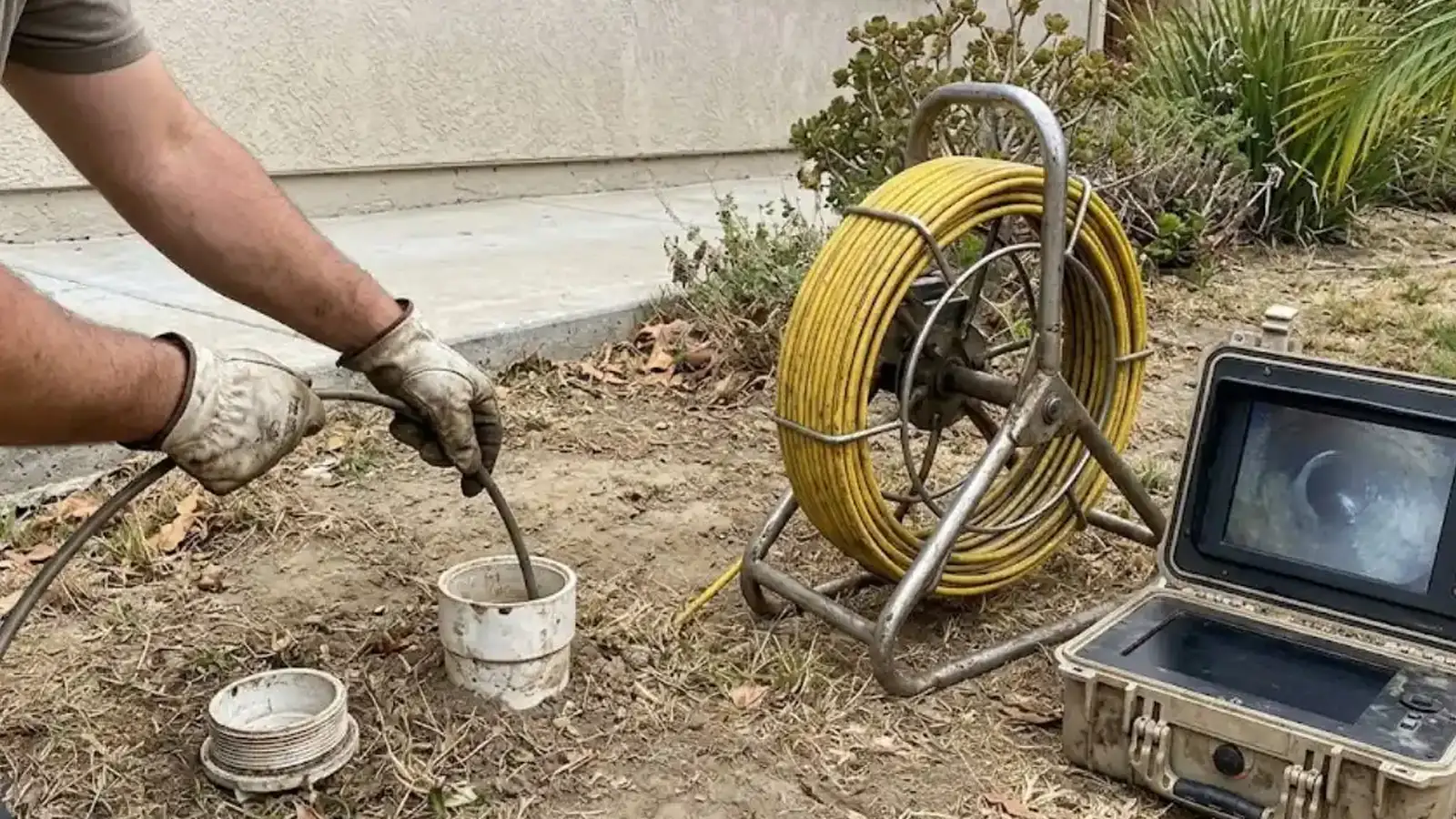
What a sewer camera shows
We feed a waterproof camera on a flexible rod through a cleanout or an opened fixture. The camera shows the pipe's interior in real time, including its material, joints, roots, cracks, bellies and buildup. A locator on the camera head pinpoints depth and position so any repair can be targeted.
You see what we see. That is the point of the inspection. Instead of being told a line needs to be replaced, you watch the picture and hear the options.
When an inspection makes sense
Older sewer laterals are a common hidden cost. A camera look before closing gives you something concrete to negotiate with.
If cable work keeps clearing the line only for a short time, the camera finds the underlying cause.
Lining, spot repair and replacement all start with knowing where the problem is and how bad it is.
What you receive after the visit
- A plain description of what the camera found and where, measured from the cleanout.
- Whether the pipe is a candidate for cleaning, lining, spot repair or replacement.
- A clear price for any repair before work starts, with no obligation to go ahead.
Why Westlake homes are a good match for camera work
Westlake includes older neighborhoods around the historic center, newer developments and commercial areas such as Crocker Park and the Columbia Road corridor. The sewer materials and ages differ across these, so a one-size repair recommendation rarely fits. Seeing the pipe lets us match the repair to the line.
The camera also helps after heavy rain. If a basement has taken on water, we can check whether the sewer lateral is part of the cause or the water came from elsewhere. See basement waterproofing and sump pump service for the other common sources.
If the camera finds a clog or buildup rather than damage, we can often clear the line during the same visit. If it finds damage, sewer line repair covers the options.
How to prepare for the visit
- Know where your cleanout is. It is usually a capped pipe near the foundation or in the basement.
- Clear a path to it and move stored items so the technician has room to work.
- Tell us what you have noticed and when, including smells and which fixtures act up.
- If you are buying the house, send the address and ask for a copy of the findings.
Reading the results
| What the camera shows | What it means | Usual next step |
|---|---|---|
| Clean pipe, normal joints | The line is in good shape | No work needed |
| Grease, scale or paper buildup | The pipe is restricted but intact | Cable or jet cleaning |
| Roots at joints | Joints are open and roots will return | Cut roots, then consider repair |
| Cracks, offset or collapsed section | The pipe is damaged | Spot repair, lining or replacement |
A line with a belly will show standing water in the picture. That is not always urgent, but it explains repeat clogs and is useful to know before you buy a house.
Many inspections end with good news. A line that looks sound today gives you a record to compare against later, and it tells you that a recurring clog is a habit problem rather than a pipe problem.
Want to see inside your sewer line before you decide? Call to book a camera inspection.
Call (440) 468-0237Frequently asked questions
A typical inspection takes under an hour once we have access to a cleanout. Long lines, difficult access or a line that needs cleaning first can add time.
No. The camera is a small flexible rod and does not harm sound pipe. We would clean first if buildup blocks the view.
A cleanout makes access easy. If there is none, we can sometimes enter through a toilet or an opened trap, and we may recommend installing a cleanout.
We describe what we found and show you the footage on site. Ask the dispatcher if you need a copy for a home purchase.