Galvanized steel was a standard material for water supply lines in houses built through the middle of the last century. A zinc coating protects the steel from rust, but the coating wears away on the inside, and rust then builds up along the pipe wall. The pipe narrows over time, and the water that passes through it picks up rust and mineral flakes.
The result is a house where the pressure is weak at the upstairs bathroom, hot water is slow, and a tap that has not run in a while delivers brown water. If those symptoms sound familiar, check what the supply pipes are made of before you spend money on fixtures.
How to tell if you have galvanized pipe
| Test | Galvanized steel | Copper or plastic |
|---|---|---|
| Color | Dull gray, sometimes with rust streaks | Orange-brown copper or white, red or blue plastic |
| Magnet | A magnet sticks | A magnet does not stick |
| Scratch with a key | Silver-gray metal under the surface | Bright copper color, or plastic |
| Joints | Threaded fittings with visible threads | Soldered, crimped or push-fit joints |
Look where the water line enters the house and at the pipes in the basement or crawl space. If you find gray threaded pipe, you have galvanized supply lines in at least part of the house. Note where they run, because a partial replacement may be an option.
Why galvanized pipe fails
Rust builds up on the pipe wall and narrows the opening, so flow drops.
Scale and rust together choke the pipe, especially in hot water lines.
Threaded joints corrode first and leak at the fittings.
Where galvanized meets copper, galvanic corrosion eats the steel side.
Options: replace all, replace part or monitor
| Option | When it makes sense | Trade-off |
|---|---|---|
| Whole-house repipe | Widespread corrosion, low pressure and repeated leaks | Most disruption, longest-lasting result |
| Partial replacement | One failing run, such as the kitchen or a second bathroom | Leaves older pipe in place for later |
| Monitor and repair | No symptoms and an occasional drip | Failures will continue and tend to speed up |
Our repiping page explains the materials we use and how the work is staged. If a pipe has already failed, burst pipe repair covers the emergency side, and leak detection finds the leaks you cannot see.
Westlake notes: lead, service lines and who owns what
Cleveland Water says in its published report that some homes and buildings in its service area have lead service lines or plumbing that contains lead. It keeps a service line inventory that you can search by address, and its 2024 lead sampling found 1 of 52 samples above the 15 parts per billion action level, with a 90th-percentile result of 3.15 parts per billion.
Interior galvanized pipe is a separate question from the service line that runs from the street to your meter. Cleveland Water's leak guidance says the utility repairs the line from the street main to the curb stop, and the customer is responsible for the service line from there, including the stretch from the tree lawn to the meter. Check the inventory for your address, then ask the utility what it means for you.
What a replacement involves
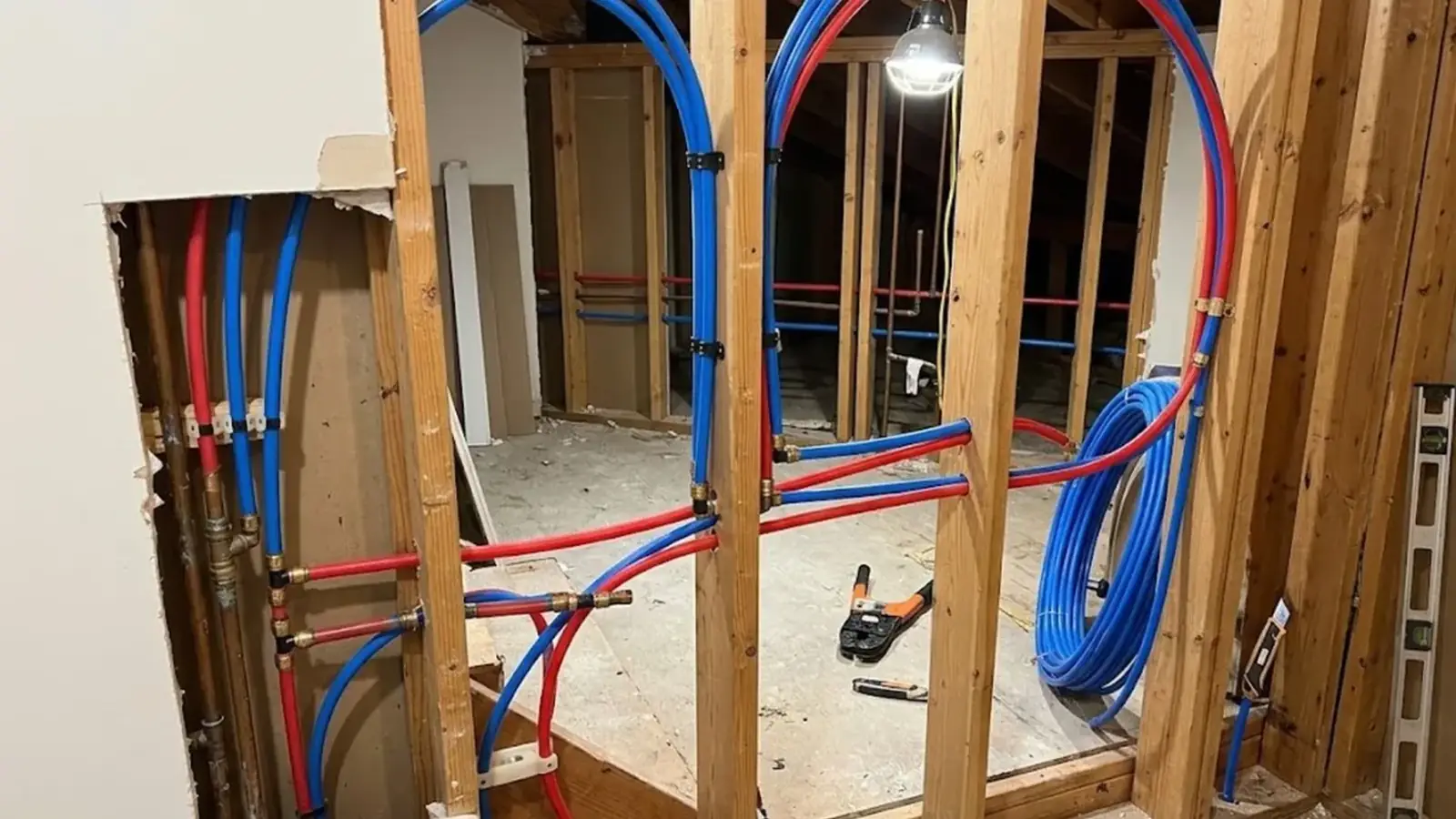
We start by mapping the existing pipe runs and deciding on the route for the new ones. In many houses, the basement or crawl space gives open access to most of the lines, and walls are opened only where needed for risers and fixtures. The water is off for part of a day, and the work is staged to restore a bathroom and the kitchen first.
New material is usually PEX, copper or CPVC. Each has a place. PEX is quick to run in existing walls, copper is a long-standing choice for exposed runs and CPVC is a lower-cost option for some jobs. We explain the reasons for our recommendation and listen to your preference.
Permits
Replacing supply piping is plumbing work that generally needs a permit and an inspection, though the rules vary by city. Westlake's city website lists Building Permits and Registered Contractors without describing the plumbing rules, so call City Hall at 440-871-3300 and ask what applies. Keep the permit and inspection record. It is useful when you sell the house.
Before you decide
- Check the water pressure at several fixtures, not just one.
- Run the cold tap for a minute after the house has been idle and note the water color.
- Look at the pipes in the basement for rust, drips and green corrosion at joints.
- Ask for a clear price in writing, with the scope of drywall repair spelled out.
- Look up your address on the utility's service line inventory.
We serve Westlake and nearby towns, including the area on our Rocky River page.
Fixing low pressure before you commit to a repipe
Not every low-pressure complaint means failing pipe. A partly closed main valve, a failed pressure regulator or clogged aerators can all choke flow. Check those first, because they are cheaper to fix. If pressure is low at every fixture and the pipes are galvanized, corrosion is the likely cause.
A pressure gauge on an outdoor spigot tells you the incoming pressure. Compare it with the pressure at an upstairs tap. A big drop between the two points to the pipes inside the house.
Living with galvanized pipe while you plan
If a replacement is not in the budget yet, you can reduce the risk. Know where the shutoff valves are, replace corroded fittings as they fail and run the taps now and then so water does not sit. Do not use hot water from a line with heavy rust for drinking or cooking. Keep a list of the symptoms and dates, which helps a plumber give a firm recommendation when you are ready.
Replacement supply piping must meet the Ohio Plumbing Code, which is based on the International Plumbing Code (IPC), so ask what material and fittings your plumber plans to use and whether they are approved for drinking water.
Think you have galvanized pipe? Call and describe what you see.
Call (440) 468-0237Sources
Lead, sampling and ownership statements are from Cleveland Water's published materials. Permit information is from the Westlake page named. Rules can change, so confirm with the source.
Questions homeowners ask
The pipe itself is not usually an immediate hazard, but it corrodes, restricts flow and can discolor water. Lead is a separate question tied to older service lines and fixtures, so check the utility's inventory and test if you are concerned.
It varies with the water and the use. Many lines run for decades before problems show, but once leaks and low pressure start, they tend to continue.
Yes, in sections. A partial repipe addresses the worst runs and leaves the rest for later, though mixing materials needs the right fittings to avoid corrosion.
Cleveland Water maintains an inventory that you can search by address. If the record looks wrong, the utility offers a way to report your service line material.