
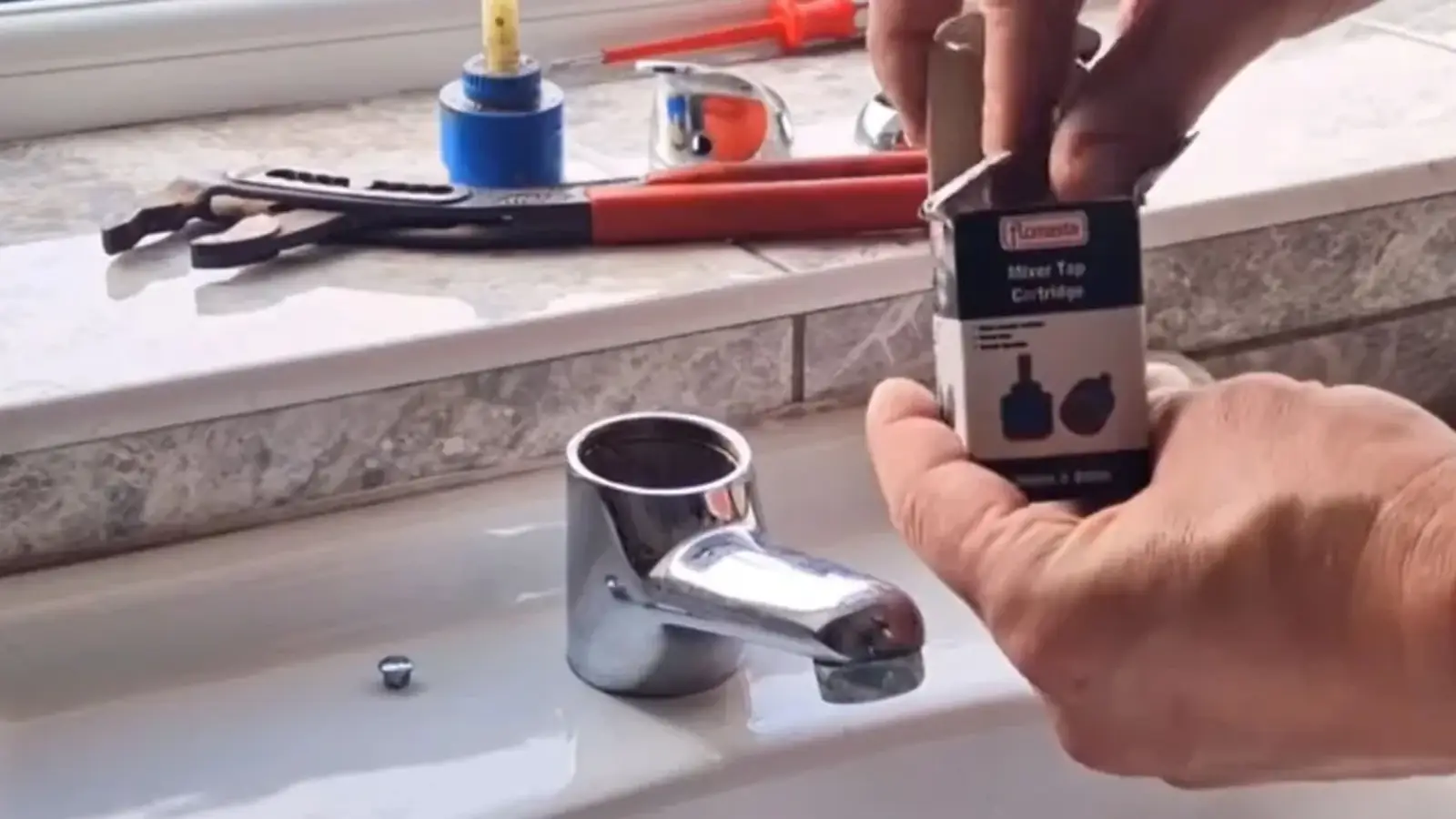
Most single-handle shower valves use a cartridge, a plastic or brass cylinder with rubber seals that slides to mix hot and cold water. When the seals wear or mineral scale roughens the cartridge, water gets past it, and the showerhead drips after you turn the water off.
The fix is to replace the cartridge. It costs little and takes under an hour if the parts come apart cleanly. The harder part is the one that happens before you start: finding the right cartridge and a shutoff that actually stops the water.
Before you touch the handle
- Shut off the water. Use a shutoff for the bathroom if there is one, or shut the main.
- Open another tap to relieve pressure and confirm the water is off.
- Plug the tub drain with a rag so screws do not fall in.
- Take a photo of the handle and trim before disassembly.
If the shutoff does not hold, stop. A valve that does not close is the first thing to fix. Our page on faucet repair explains how we deal with stuck stops.
Replacing the cartridge
- Remove the handle by loosening the set screw, often under a small cap.
- Remove the trim plate and the stop tube or retaining clip.
- Pull the cartridge straight out with pliers, noting its orientation.
- Match it to a new cartridge from the same maker and model.
- Apply plumber's grease to the new seals, insert it in the same position and reassemble.
Identifying the brand
Cartridges are not interchangeable, and a near match will leak. Look for a brand name on the handle or trim, or on the back of the old cartridge. Bring the old cartridge to the store, or send a photo to a plumber who can identify it.
If the old valve is no longer made, it may be easier to replace the whole valve. That means opening the wall, so it is a plumber's job.
| Symptom | Likely cause | Fix |
|---|---|---|
| Drip from the showerhead after shutoff | Worn cartridge seals | Replace the cartridge |
| Water at the handle | Worn O-rings or loose retaining clip | Replace O-rings or seat the clip |
| Hard to turn | Scale on the cartridge | Clean or replace the cartridge |
| Water cannot be mixed to the right temperature | Worn or mismatched cartridge | Replace the cartridge |
| Drip from the tub spout | Diverter fault, not the cartridge | Replace the diverter |
Westlake notes: water use and hard water
Cleveland Water's tips say a loose connection to the pipe stem is a common showerhead leak and that pipe tape can often fix it, with a worn internal washer as the other usual cause. Check the showerhead connection before you open the wall, because it is the easiest fix.
Its 2025 report lists hardness, as calcium carbonate, with an average of 117. In moderately hard water, scale builds on cartridges and showerheads over time, so a stiff handle can be a scale problem rather than a worn part. Soaking removable parts in vinegar loosens deposits.
When the leak is not the cartridge
A drip from the showerhead can also come from a leaking diverter, a loose arm connection or a cracked valve body. A wet ceiling below, or a stain on the wall near the valve, suggests a leak inside the wall rather than at the head.
If you suspect that, stop using the shower and call. A leak in the wall damages drywall and can lead to mold. Our leak detection page explains how we find hidden leaks without opening more than necessary.
When to call a plumber
- The shutoff will not hold or the main valve does not close.
- The cartridge will not come out without tools you do not have.
- The valve is old and parts are not available.
- You see water stains near the wall or below the bathroom.
- The leak continues after a new cartridge.
We repair showers in Westlake and the nearby towns, including the area on our Rocky River page.
Tools and parts to gather
- A screwdriver set and an Allen key set for the handle screw.
- Pliers or a cartridge puller for stuck cartridges.
- Plumber's grease for the new seals.
- A replacement cartridge that matches the old one exactly.
- Pipe tape and a flashlight.
Test it and watch for slow leaks
After reassembly, open the shutoff slowly and run the shower. Check the handle and trim for water, then turn it off and watch the showerhead for a few minutes. A drip that stops after a short time is just water draining from the pipe.
Check the wall or the ceiling below over the next day. A small leak at a new seal shows up as a damp spot long before it becomes a stain.
Preventing the next drip
Clean the showerhead and the handle area now and then to keep scale from building. Replace the cartridge if the handle becomes stiff, rather than forcing it. If you live where the water is moderately hard, a yearly look at the trim and the showerhead saves a bigger repair later.
Types of single-handle cartridges
Single-handle valves come in a few designs. Pressure-balanced valves use a spool that adjusts when water pressure changes on either side. Thermostatic valves use a wax element to hold a set temperature. Some older valves use a ball or a disc design instead.
They look similar from the front, which is why identifying the brand matters. A cartridge from the right brand and the wrong type will fit badly or leak. If you cannot tell the type, take a clear photo of the handle and the removed cartridge.
A note on shutoffs in older bathrooms
Many older homes have no shutoff for the shower alone, so the repair means turning off the whole house. If you are working on the valve anyway, ask a plumber about adding service stops. They cost little at the time and make every later repair simpler.
Shower will not stop dripping? Call and describe the faucet.
Call (440) 468-0237Sources
The showerhead and faucet guidance is from Cleveland Water's published tips, and hardness is from its 2025 report.
Questions homeowners ask
A worn cartridge or seals let water pass. Replacing the cartridge usually stops it.
Find the brand and model on the handle or the cartridge itself. If you cannot, a photo or the old cartridge helps a plumber identify it.
A drip wastes water but is not dangerous. A leak inside the wall should be dealt with sooner.
Yes. Scale on cartridges and stems can stiffen a handle. Cleveland Water reports moderately hard water, so soaking removable parts in vinegar sometimes helps.