A tankless heater makes hot water on demand, but it cannot shorten the wait caused by a long pipe. The cold water already in the line has to run out before the hot arrives. In a house with a bathroom far from the heater, that wait can be long, and it wastes water.
A recirculating pump solves that by circulating hot water through a loop, so the pipe near the fixture stays warm. You turn the tap and hot water arrives almost at once. The pump needs power, a return path for the water and sensible controls, and it also needs a heater that tolerates the extra cycling.
Three ways to set one up
| Setup | How it works | Best fit |
|---|---|---|
| Dedicated return line | A separate pipe carries water back to the heater | New construction or open walls |
| Crossover valve at the farthest fixture | Uses the cold line as a return path and mixes cold water in | Existing homes without a return line |
| Built-in recirculation in the heater | The tankless unit includes a pump and a small buffer | Heater models that offer it |
The dedicated return line gives the best result, but it means running another pipe, which is easier during a remodel. A crossover valve is simpler to add, but the cold line can carry warm water for a while, which some people find odd. Our plumbing installation team can survey the house to see which one fits.
Controls matter more than the pump
A pump that runs all day wastes energy and puts extra wear on the heater. The usual controls are a timer, a temperature sensor or an on-demand button near the fixture. A push button or a motion sensor starts the pump only when someone is about to use hot water, which keeps energy use low.
Some tankless heaters are not designed for external recirculation, or they require a particular kind of pump. Check the manual or the manufacturer before buying a pump, because the wrong one can void a warranty or cause error codes.
What a recirculating pump does not do
- It does not increase the flow rate of the heater.
- It does not fix low water pressure.
- It does not make up for a heater that is too small for the house.
- It does not remove scale. A tankless unit in hard water still needs periodic flushing.
Westlake notes: scale and permits
Cleveland Water's 2025 report lists hardness, as calcium carbonate, with an average of 117 and a range of 105 to 130. In a recirculating system, hot water passes through the heat exchanger more often, so scale is a real concern for a tankless unit. Isolation valves make yearly descaling easy, and your plumber should install them with the heater.
Westlake's city website lists building permits and the Residential Code of Ohio among its links, but does not say whether adding a return line needs a permit. Call City Hall at 440-871-3300 to ask before work starts.
Questions to answer before you buy
Pre-purchase checklist
- Which heater do you have? Look up its model and whether the maker supports recirculation.
- Where is the farthest fixture? Distance from the heater decides whether a pump is worth it.
- Is there power nearby? The pump needs an outlet near the heater or the fixture.
- How will it be controlled? Pick a timer, a sensor or a button before installation.
When a pump is not the answer
If only one bathroom has a long wait, a small point-of-use heater near it may cost less than a loop. If the whole house waits, check the pipe sizes. Old three-quarter-inch lines holding a lot of water mean more wait than one-half-inch ones.
A wait of a few seconds is normal in any house. A wait of a minute or more is the sign that a pump or a re-pipe could help. See repiping if the lines themselves are the problem.
We handle pumps as part of tankless water heater installation and repair. If you live in Rocky River, we cover that area as well. See the Rocky River page for details.
What the pump saves and what it costs to run
The main saving is water. Every gallon that runs down the drain while you wait for hot water is water you paid for and did not use. A pump that cuts that wait helps in a house where the wait is long, and does little in a house where the wait is short.
The running cost comes from the pump's electricity and from the heat that the loop loses to the walls. A control that limits when the pump runs keeps that low. Insulating the hot water pipes reduces the loss, and it also makes the water hotter at the tap.
What installation day looks like
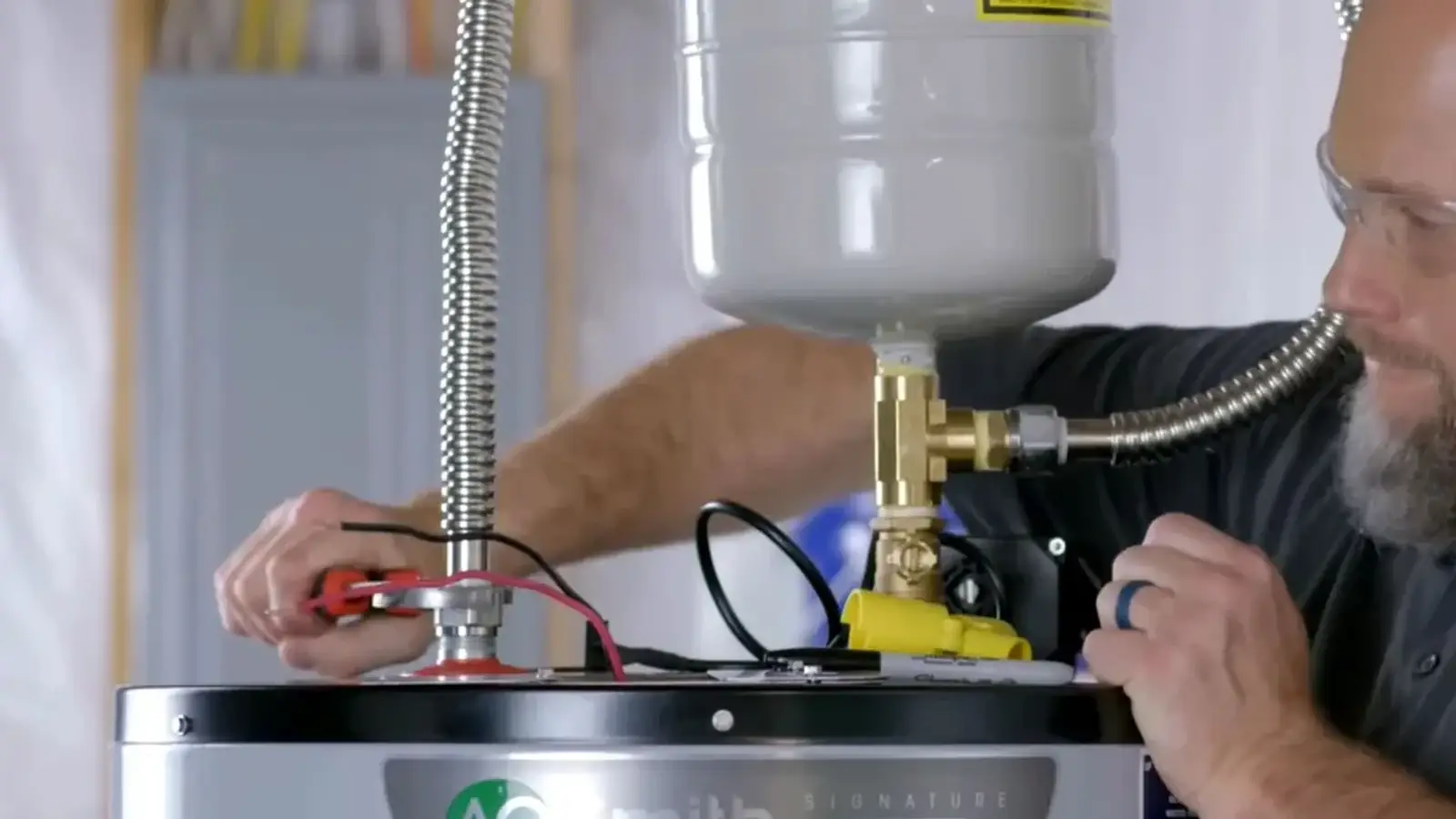
The plumber finds the farthest fixture, installs the crossover valve or return connection there and mounts the pump near the heater. Wiring and the control, whether a timer or a push button, come next. The heater is checked to confirm it accepts the added flow.
Expect the water to be off for a short time while connections are made. We test the loop afterward by running the pump and checking how quickly the farthest tap warms. If the result is not what you expected, we adjust the control rather than leave it.
Noise, wear and upkeep
Modern recirculating pumps are quiet, but a pump on a wall near a bedroom can still be heard. Mount it on a rubber isolator and keep it away from thin walls. Plan to check the pump now and then, and descale the heater on its usual schedule. A pump does not need much, but it is one more part that can fail.
Want a recirculating pump on your tankless system? Call and describe the layout.
Call (440) 468-0237Sources
Hardness figures are from Cleveland Water's published report. Permit information is from the city page named.
Questions homeowners ask
It adds a small amount of electricity and, if it runs all day, extra gas use as the heater reheats the loop. Timers and buttons keep that low.
Not always. A crossover valve at the farthest fixture lets the pump use the cold line as the return, though the setup has drawbacks.
No. Some heaters include recirculation, and others require a specific pump or accessory. Check the manual first.
Scale forms in the heat exchanger, and a recirculating system sends hot water through it more often. Cleveland Water's moderately hard water makes yearly flushing a sensible habit.