
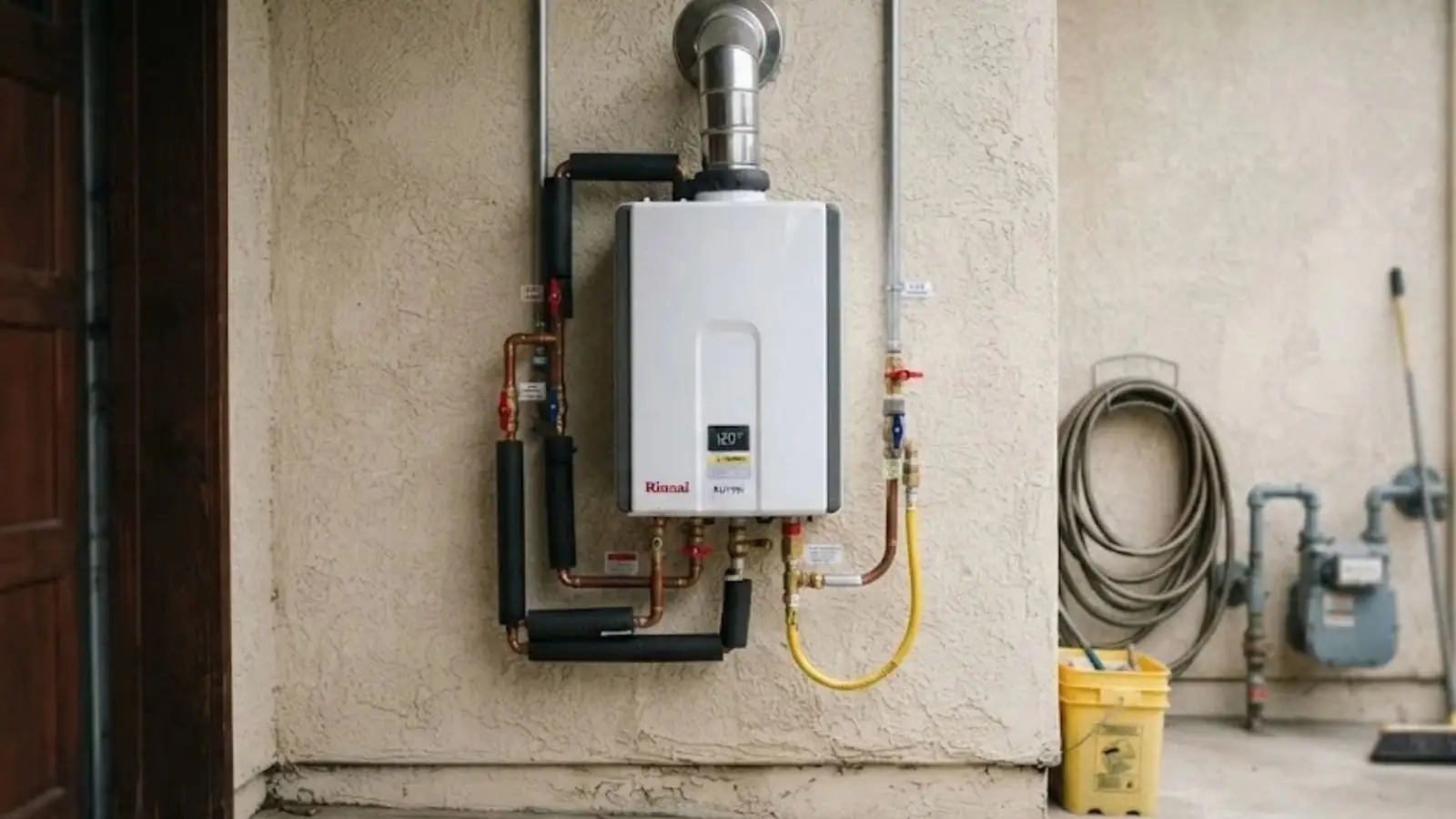
The question comes up because tankless units burn much more gas at once than a tank heater. A tank heater keeps a small burner running to reheat stored water. A tankless unit fires a large burner the moment a hot tap opens, because it has to heat the water in a single pass. That demand is several times the input of a typical tank heater.
A half-inch line that served a tank heater, a stove and a furnace for decades may not carry enough gas when a tankless unit fires on top of them. The result is a unit that cuts out, throws error codes or runs weakly. The fix is to size the line properly before the unit goes in.
What decides the gas line size
| Factor | Why it matters |
|---|---|
| Heater gas input | Larger input needs a larger pipe to carry the gas |
| Length of the run | Longer runs lose pressure, so they need a bigger pipe |
| Other appliances on the line | Furnace, stove and dryer all draw gas, sometimes at the same time |
| Number of fittings and turns | Each one adds resistance to flow |
| Supply pressure | Set by the utility and the meter |
Gas piping is sized with tables in the fuel gas code, using the pipe length and the total load. Your plumber works through that calculation. Guessing from the pipe diameter alone, or from a forum post about someone else's house, is how a new unit ends up starved of gas.
What an upgrade can involve
- Replacing the branch to the water heater with a larger pipe.
- Running a new dedicated line from the meter.
- Having the utility upgrade the meter or regulator if the house needs more total supply.
- Adding a pressure test and leak check after any change.
- Updating the vent to the type the unit requires.
Venting is the other half of the job. Many tankless units use a sealed vent in special pipe, and some use a high-efficiency design that makes acidic condensate. A condensate drain and neutralizer are part of the install. Our tankless water heater page lists these steps, and water heater installation covers the survey.
Westlake and Rocky River notes: permits and the gas side
Gas piping changes are regulated work. Westlake's city website lists a Building Permits page and a Registered Contractors page, but it does not describe gas line rules, so call City Hall at 440-871-3300 and ask what applies to your project. Rocky River's building permits page lists a plumbing permit application and a contractor registration application, and gives the city line as 440-331-0600.
Your gas utility controls the meter and the pressure at it. Ask the utility whether the meter can supply the added load before the plumber plans a new line, because that part is the utility's call and not the plumber's.
Gas leaks and safety
If you smell gas, leave the building at once and call the gas utility or 911 from outside. Do not use switches, phones or anything that can make a spark inside the house. This applies to every gas appliance, and it is the one rule that overrides everything in this guide.
A new gas line is pressure-tested and checked for leaks with a solution or an electronic detector before it goes into service. Carbon monoxide alarms should be on every level and near sleeping areas. A tankless install is a good time to test them.
Electric tankless is another route
Electric tankless units need no gas line and no vent. They draw a large amount of current, though, and many homes need a panel upgrade to run one. If gas is a poor fit, ask about electric, and be ready for questions about the panel. Hybrid heat pump tank heaters are a third option that uses little energy and needs space and airflow.
Hard water and the gas unit
Cleveland Water's 2025 report lists hardness, as calcium carbonate, with an average of 117. In moderately hard water, scale builds in a tankless heat exchanger and cuts efficiency, so yearly descaling is a standard recommendation. Isolation valves installed with the unit make that simple.
Questions to ask before you buy a unit
Pre-purchase checklist
- What is the unit's maximum gas input? The label or spec sheet tells you.
- How long is the run from the meter? Measure it, including turns.
- What else is on the line? List the furnace, stove, dryer and any fireplaces.
- Where does the vent go? Sealed vents run through walls or the roof.
We serve Westlake and nearby towns, including the area on our Rocky River page.
How we check a gas line before quoting
We start by reading the unit's gas input from its label or spec sheet. Then we trace the existing gas piping from the meter to the water heater location, measuring each section and noting the pipe size, the fittings and the other appliances on the line. Those numbers go into the sizing table, and the result tells us whether the line is large enough.
If it is not, we explain the options. A larger branch, a new dedicated line or a smaller unit may solve it. You see the numbers, so the recommendation is not a guess.
What changes when you convert from a tank
Converting a tank heater to tankless changes more than the gas line. The old vent often cannot be reused, the water connections change and a condensate drain may be needed. The location may also move, because tankless units hang on a wall. Plan for those changes in the budget and the schedule.
The water side of a tankless install follows the Ohio Plumbing Code, based on the International Plumbing Code (IPC). Gas piping and venting have their own rules, and your plumber and the building department can tell you which apply.
Planning a tankless heater? Call and we will check the gas side first.
Call (440) 468-0237Sources
Permit information is from the city pages named. Hardness is from Cleveland Water's report. Gas rules vary, so confirm with the city and the gas utility.
Questions homeowners ask
Sometimes for a small unit on a short run, but often not. The calculation depends on the unit's input, the pipe length and the other appliances.
The plumber, using the fuel gas code tables and the unit's specifications. The utility confirms the meter can supply the load.
Gas work generally does. The city's website does not spell out the rules, so call Westlake City Hall at 440-871-3300.
It can if the line cannot supply both at once. That is why we calculate the total load before installing.